Your Wisdom Teeth Don’t Hurt — Does That Mean They’re Fine? A Leander Dentist Weighs In
You go in for a routine checkup. Your dentist pulls up the X-rays and says, “Your wisdom teeth look like they’ll need to come out eventually.” But here’s the thing — they don’t hurt. They never have. So you go home and Google it, and you find a heated debate that’s been going on in dental circles for decades: should healthy, asymptomatic wisdom teeth be removed or left alone?
It’s one of the most common questions we hear at our office. Crystal Lake Dental is a family and cosmetic dentistry practice in Leander, TX, serving Cedar Park, Liberty Hill, Georgetown, and the greater Austin area. We see this scenario regularly — patients, especially parents of teenagers, wanting a straight answer. Here’s the honest one.
Why Wisdom Teeth Get Such a Bad Reputation
Third molars — the technical name for wisdom teeth — typically emerge between ages 17 and 25. The human jaw has gotten smaller over evolutionary time, and for most people, there simply isn’t room for four extra molars. That’s where the trouble starts.
Impacted wisdom teeth (ones that can’t fully erupt because there isn’t space) are linked to a real list of problems: pericoronitis (painful infection around a partially erupted tooth), cysts, damage to adjacent second molars, crowding, and cavities in hard-to-clean areas. These aren’t hypothetical risks. We see them regularly, often in patients who were told to “wait and see” years ago.
But the evidence gets nuanced when the wisdom teeth appear healthy and aren’t causing symptoms. The UK’s National Institute for Health and Care Excellence (NICE) concluded there is “no valid evidence” supporting the prophylactic (preventive) removal of disease-free wisdom teeth. The American Association of Oral and Maxillofacial Surgeons takes a different view, recommending monitoring and often early removal in young adults because the procedure carries lower risk and faster recovery before the roots fully develop.
Both positions have merit. Neither is simply wrong. That’s why this debate matters — and why a cookie-cutter answer doesn’t serve patients well.
The Case for Removing Them Early
Here’s what genuinely tips the scale toward removal for most of our Leander patients:
- Age matters more than symptoms. Patients in their late teens and early 20s recover from wisdom tooth extraction significantly faster than patients in their 30s and 40s. The roots are shorter, the bone is less dense, and healing time is quicker. Waiting until they become a problem means dealing with a harder surgery at a less convenient time.
- Impaction trajectory is visible on X-ray. A wisdom tooth angled sideways or growing toward the second molar is not going to straighten itself out. If the imaging shows a clear collision course, early removal avoids predictable damage to a perfectly healthy adjacent tooth.
- Cleaning is nearly impossible. Partially erupted wisdom teeth sit behind the second molars in a location that’s genuinely difficult to brush and floss effectively. Decay and gum disease in that area are almost inevitable over time — it’s not a failure of effort, it’s an anatomy problem.
- Cysts develop silently. Dentigerous cysts can form around impacted teeth without any pain. By the time symptoms appear, significant bone loss may have already occurred.
The Case for Leaving Them Alone
To be fair, not every wisdom tooth needs to go. There are scenarios where monitoring is the right call:
- The teeth are fully erupted, properly aligned, and can actually be cleaned effectively with a toothbrush and floss.
- X-rays show they are not threatening adjacent teeth and are not impacted.
- The patient has medical conditions that increase surgical risk, making the risk-benefit calculation different.
- The teeth are in older patients where roots are fully formed and recovery is more complex — in those cases, if they’re truly causing no problems, observation may be reasonable.
The key phrase is “can actually be cleaned effectively.” That sounds simple but in practice, a surprising number of patients believe their wisdom teeth are fine because they don’t hurt — until a cavity or gum disease develops back there that could have been avoided.
What We Actually Do at Crystal Lake Dental
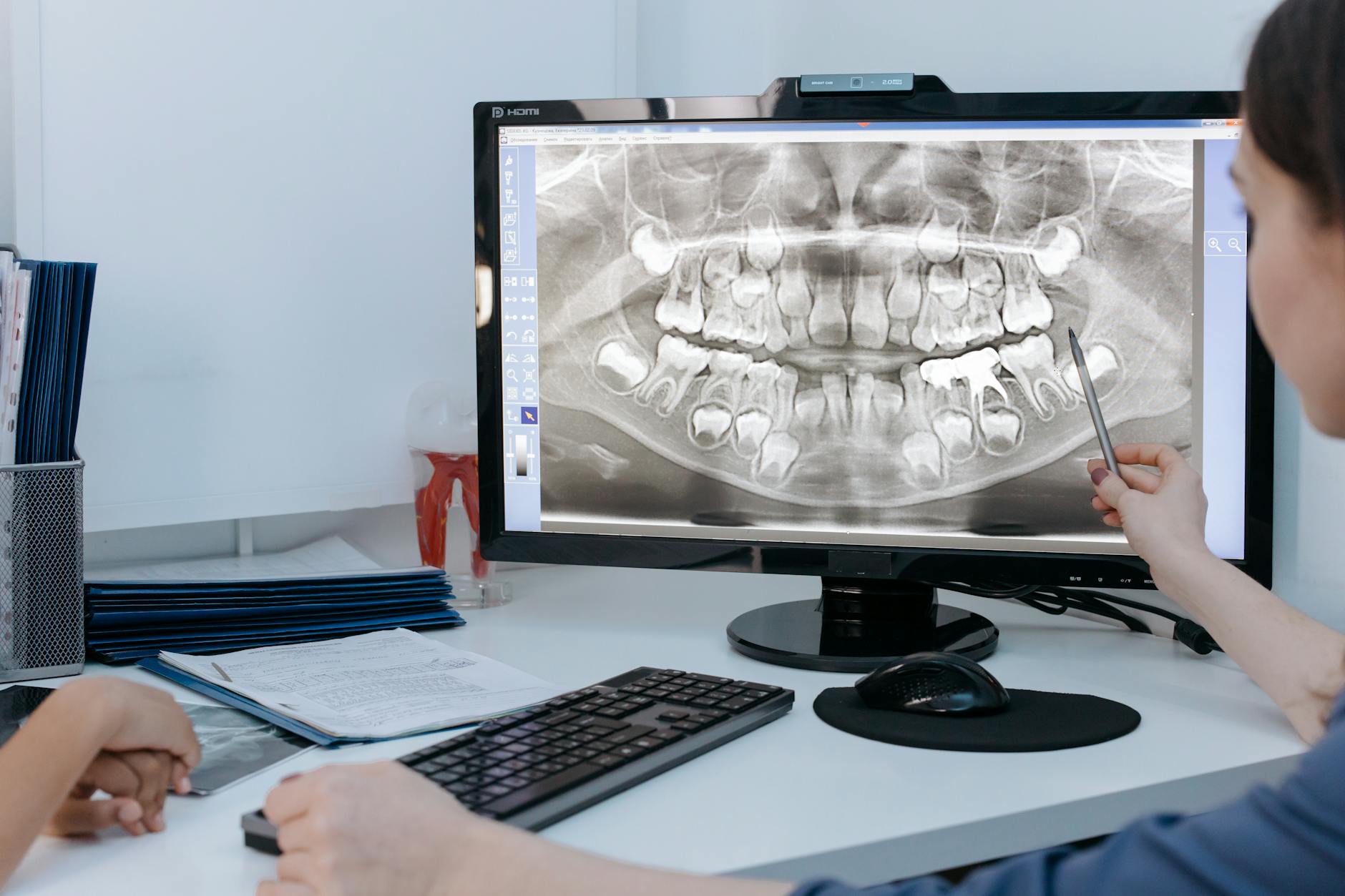
We don’t take a one-size-fits-all approach. At our Leander office, our evaluation includes panoramic X-rays that show the full picture of how wisdom teeth are positioned, how close the roots are to the inferior alveolar nerve, and whether there’s adequate space in the arch.
Dr. Sharaf, our Implant & Extraction Specialist, performs extractions and complex cases including All-on-4 implant procedures here in-office. That means when extraction is the right call, patients don’t need to be referred out and navigate a separate surgical center — it happens under the same roof where they already feel comfortable, with the option of IV sedation for anxious patients through Dr. Williams, our anesthesiologist.
For families in Leander, Cedar Park, and Liberty Hill bringing in teenagers and young adults, the honest advice is this: have the conversation early, get the X-rays, and make a decision based on your child’s specific anatomy — not a blanket rule in either direction.
The Cost Question
One of the reasons patients resist wisdom tooth removal when there are no symptoms is the cost. Extraction of four wisdom teeth, especially with sedation, isn’t cheap. Many dental insurance plans cover a portion, but patients often don’t know what to expect until they get the estimate.
What we’ve seen is that the cost of dealing with an infected wisdom tooth, a damaged second molar, or a cyst is almost always higher — and the experience is worse — than a planned elective extraction. It’s one of those cases where postponing to save money often costs more in the end. That said, we work with patients on payment plans and help maximize whatever insurance benefits are available.
Bottom Line
If your dentist recommends wisdom tooth removal, ask why. A good answer includes imaging evidence — the actual position of the teeth, the proximity to nerves, and whether cleaning is realistically possible. “Everyone gets them out” is not a sufficient answer. Neither is “they don’t hurt, so they’re fine.”
The real answer lives in the X-ray and the clinical picture. Get that evaluation early, while your options are best and recovery is easiest.
Ready to get a straight answer about your wisdom teeth? Schedule a consultation at Crystal Lake Dental in Leander — we’ll take the imaging, walk you through what we see, and give you an honest recommendation without pressure in either direction.
Frequently Asked Questions
Do wisdom teeth always need to be removed?
Not always — but it depends entirely on how they’re positioned and whether they can be kept clean. Wisdom teeth that are fully erupted, properly aligned, and accessible for effective brushing and flossing can sometimes stay without causing problems. However, most people don’t have enough jaw space for this, and partially erupted or impacted wisdom teeth carry real risks over time including infection, cysts, and damage to neighboring teeth. At our Leander office, we evaluate each case individually with full X-rays before making any recommendation.
Is wisdom tooth removal painful?
The procedure itself is not painful — you’re fully numb during the extraction, and we offer IV sedation for patients who are anxious or prefer to be unaware of what’s happening. Recovery discomfort is real: the first 2-3 days typically involve swelling and soreness managed with over-the-counter pain relievers and cold compresses. Most patients are back to normal activities within a week. Younger patients in their teens and early 20s generally recover faster than older adults.
How do I know if my wisdom teeth are impacted?
You can’t always tell by how they feel. Impacted wisdom teeth often cause no pain at all, especially in early stages. The only reliable way to know is through a panoramic or cone beam X-ray that shows the full position of the tooth beneath the gumline — how it’s angled, how close it sits to the nerve, and whether it has room to erupt. If you haven’t had your wisdom teeth evaluated with updated imaging, that’s the first step, especially for teenagers and young adults in the Leander and Cedar Park area.
Does insurance cover wisdom tooth removal?
Most dental insurance plans cover wisdom tooth extraction to some degree, particularly when there is clinical justification such as impaction, infection risk, or positioning that threatens adjacent teeth. Coverage varies widely by plan — some cover a set dollar amount, others cover a percentage after deductible. We verify benefits before treatment so you know what to expect. Patients without insurance or with high out-of-pocket costs can ask us about payment plan options to spread the cost.