Root Canals Don’t Cause Cancer: Why This Myth Won’t Die (And What Leander Patients Should Know)
Crystal Lake Dental provides dental care in Leander, TX for families, emergencies, and long-term oral health. Our team combines modern treatment, a comfortable experience, and practical next steps for local patients.
You’ve probably seen it — a viral post claiming root canals are “toxic time bombs,” that they cause cancer, heart disease, or mysterious chronic illness. Maybe a friend sent you a YouTube video with a holistic dentist warning you to “just pull the tooth.” Maybe you’re sitting in our Leander office right now, second-guessing the treatment plan we just discussed.
I get it. Dr. Allan Hsu here. I’ve been practicing in Leander since 2014, and this myth refuses to die. So let’s talk about it — honestly, with evidence, and without the sales pitch.
Where This Myth Came From (And Why It’s Still Around)
The root canal conspiracy traces back to a dentist named Weston Price in the 1920s. He believed that bacteria trapped in root-canaled teeth leaked toxins into the body, causing everything from arthritis to cancer. His research was deeply flawed — he extrapolated findings from rabbit experiments and ignored basic science. By the 1950s, his work had been thoroughly debunked.
But here’s the thing: fear spreads faster than facts. When you’re in pain, when you’re scared, when you don’t trust the medical establishment, a simple story (“root canals are poison, just pull the tooth”) feels safer than nuance.
Add in a few high-profile documentaries, wellness influencers with big platforms, and the algorithm serving you “alternatives,” and suddenly you’re questioning whether modern dentistry is a scam.
It’s not.
What Actually Happens During a Root Canal
Let’s strip away the drama. A root canal is not a mystical procedure. It’s plumbing.
When the nerve inside your tooth gets infected (from deep decay, a crack, or trauma), you have two options:
- Remove the tooth entirely
- Clean out the infected tissue and seal the tooth
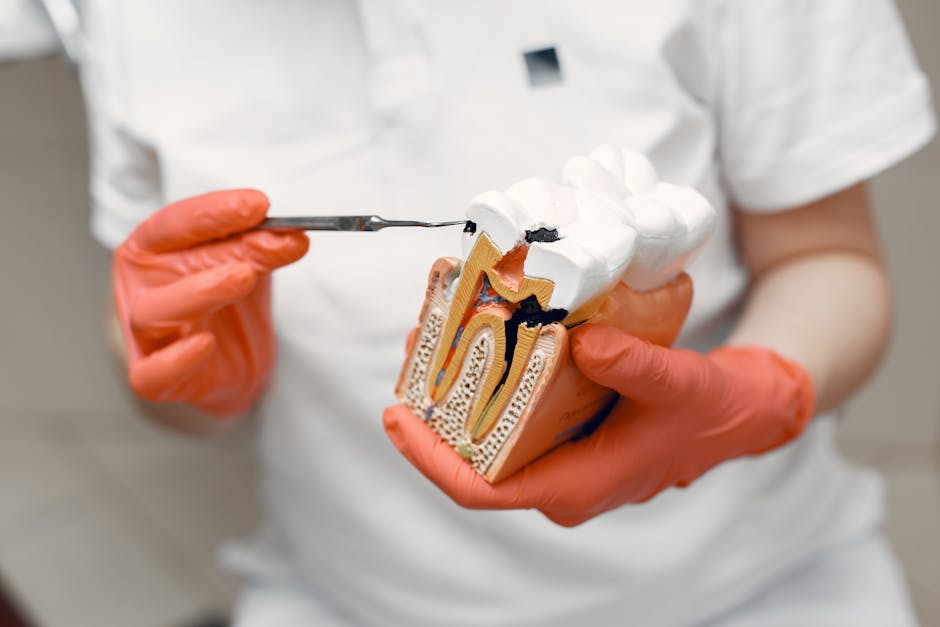
Option 2 is a root canal. We remove the infected pulp, disinfect the canals, fill them with a biocompatible material (gutta-percha), and seal it. The tooth stays. Your jawbone stays. Your bite stays stable.
The alternative — extraction — means bone loss, shifting teeth, and eventually needing an implant or bridge. Which, ironically, costs more and involves more procedures.
The Science: What Do We Actually Know?
Here’s what the research says:
- No link to cancer. The American Association of Endodontists reviewed decades of studies and found zero credible evidence linking root canals to cancer. The American Cancer Society agrees.
- No link to systemic disease. A 2013 study in JAMA Otolaryngology found that root-canaled teeth were associated with a reduced risk of certain cancers compared to extracted teeth.
- Bacteria exist everywhere. Your mouth has billions of bacteria right now. So does your gut. The immune system handles it. A properly treated root canal is sterile and sealed — there’s no “leaking toxins.”
Yes, a failed root canal (one that wasn’t cleaned thoroughly or developed reinfection) can cause localized infection. That’s treatable. It’s not systemic poison.
Why Do People Still Believe It?
Because the internet rewards fear. Because “natural” sounds safer than “medical.” Because when you’re in pain and don’t trust the dentist, pulling the tooth feels like control.
But here’s the honest truth: I don’t get rich off root canals. I’d make more money if you extracted and got an implant. Root canals save teeth. That’s it.
At Crystal Lake Family Dentistry in Leander, we also have Dr. Sharaf, an Implant & Extraction Specialist who specializes in extractions and implants. If extraction were genuinely better for you, we’d tell you. We do both. We’re not emotionally attached to saving every tooth — we’re attached to giving you accurate information so you can decide.
When Should You Actually Pull a Tooth?
There are legitimate cases where extraction makes sense:
- The tooth is fractured beyond repair
- There’s severe bone loss from gum disease
- The cost of saving the tooth (root canal + crown) doesn’t make financial sense for your situation
- You’re planning implant-supported dentures anyway
These are real conversations we have in Leander every week. Not every tooth is worth saving. But fear of a debunked myth from the 1920s is not a good reason to lose a tooth.
What About “Holistic” or “Biological” Dentists?
Some biological dentists refuse to do root canals on principle, citing the same Weston Price research. They’ll recommend ozone therapy, laser treatments, or immediate extraction with a “clean” implant.
Here’s my take: I’m not anti-holistic. I think minimizing metals, avoiding unnecessary X-rays, and respecting patient concerns is good dentistry. But rejecting root canals based on debunked science while charging $5,000 for a “biological implant protocol” is not evidence-based care — it’s ideology with a premium price tag.
You deserve better.
The Real Risk: Avoiding Treatment Altogether
The actual danger isn’t the root canal. It’s the untreated infection.
I’ve seen patients in Cedar Park and Leander delay care because they were “researching alternatives.” By the time they come in, the infection has spread to the jaw, the face, or worse. Dental infections can be life-threatening. That’s not fear-mongering — it’s physiology.
If you’re in pain, if you have swelling, if a tooth is sensitive to heat, don’t wait. Don’t Google your way into a systemic infection.
What We Do at Crystal Lake Family Dentistry
We’re not here to push procedures. We’re here to solve problems. Dr. Hsu (me), Dr. Tamkeen, Dr. Akli (orthodontics), Dr. Sharaf (oral surgery), and Dr. Williams (anesthesiology for IV sedation) — we’re a team. We give you options. We explain the trade-offs. We respect your budget and your timeline.
If you need a root canal, we’ll tell you why. If extraction makes more sense, we’ll tell you that too. If you want a second opinion, we’ll support that. But we won’t lie to you, and we won’t let internet myths drive your care.
Bottom Line
Root canals don’t cause cancer. They don’t cause heart disease. They don’t leak toxins into your bloodstream. They’re a well-researched, effective way to save a tooth and avoid extraction.
Could they fail? Sure. So can fillings, crowns, and implants. Nothing in dentistry (or medicine) is 100%. But the success rate for root canals is over 95% when done properly.
If you’re in Leander, Cedar Park, or the Austin area and you’ve been putting off treatment because of what you read online, let’s talk. Bring your questions. Bring your concerns. We’ll go through it together.
Ready to get clarity on your dental care? Book an appointment at Crystal Lake Family Dentistry and let’s figure out the right plan for your situation — not the internet’s.
Frequently Asked Questions
How often should I visit the dentist?
Most patients benefit from a dental visit every 6 months, though some need more frequent care.
Do you accept dental insurance?
We accept many dental insurance plans and can help you understand your benefits before treatment.
What makes your practice different?
We combine modern technology, local experience, and a patient-first approach to make care easier and more comfortable.